

Insights
An ESG Take on Paraguay's Bitcoin Mining Industry
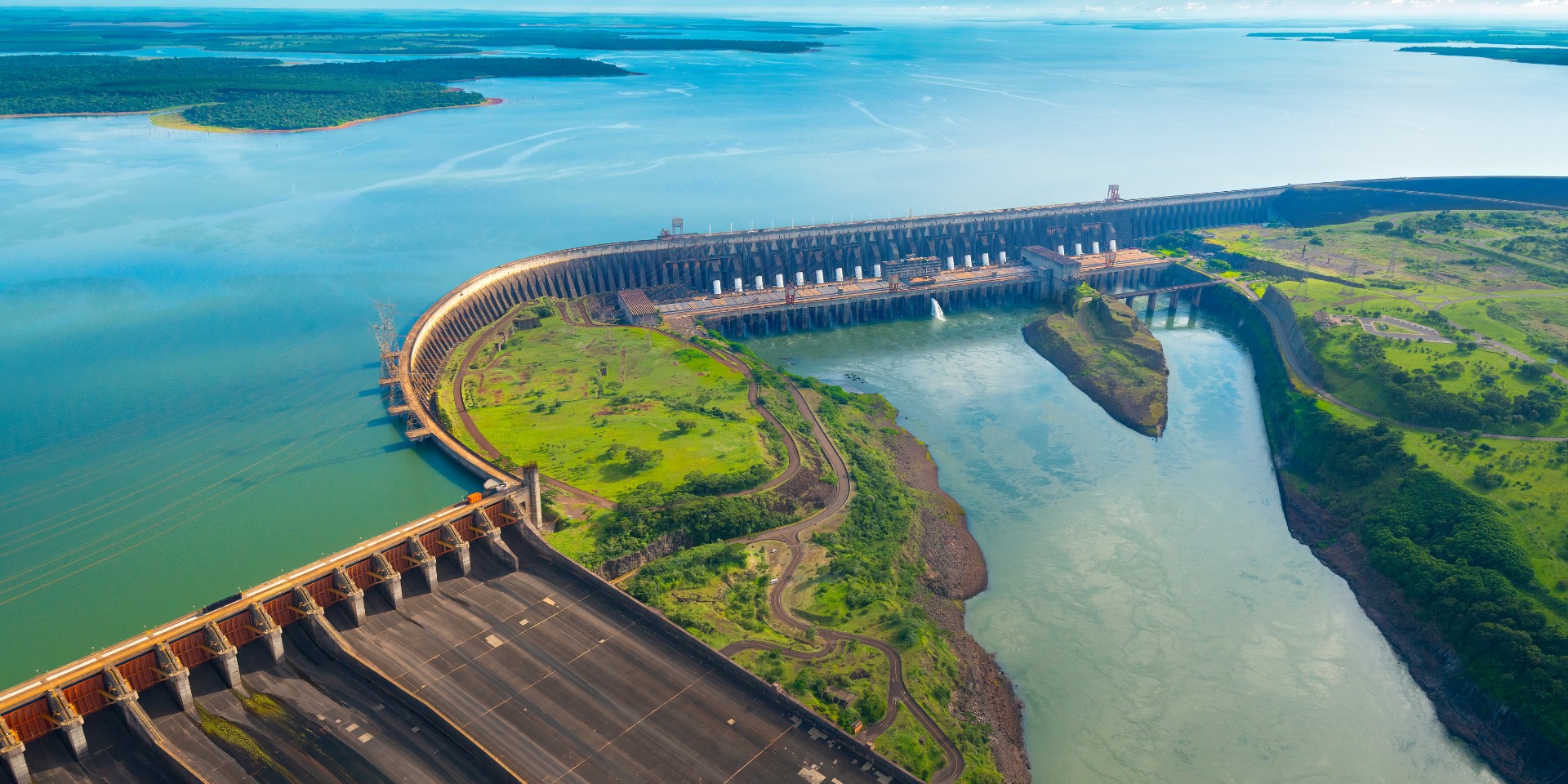
Itaipu dam, Paraguay.
Paraguay is quietly becoming one of the most interesting Bitcoin ESG mining stories in the world.
The energy context
Starting in the 1970s, Paraguay built three enormous hydro dams that maximise its abundant natural resources:
- Itaipu — 14,000 MW
- Yacyreta — 1,600 MW
- Acaray — 210 MW
I'm fortunate to know Gustavo Vexelman, one of the original engineers, and through him I've come to appreciate what a technological marvel the Itaipu dam is. It was the largest hydro dam ever built, and still ranks 3rd globally today. It generates nearly twice as much energy as the national grid requires.
What do you do with all this excess?
The cleanest, quickest, and most lucrative option was to invite the Bitcoin mining community to set up shop — which they did at scale. Paraguay is now a major hub with ~43 EH/s of hashrate, accounting for 4.3% of the global total.
Economic impact
The economic upside for Paraguay? $350M injected into the national energy provider ANDE in 2026. Bitcoin miners also provide a valuable load balancing service which solves a real challenge for the grid — I won't go into detail here, but it's a technical win.
Environmental impact
From an environmental perspective, Bitcoin mining here is an effectively zero-emission process. There is negligible impact from the equipment and installation, benchmarked at around 2% of overall energy use.
Social impact
As a direct social benefit, Penguin Group — a mission-driven local miner — has created an academy that has produced thousands of graduates, many of whom now work at leading regional and international tech companies. Their tagline says it best: “Transforming energy into human potential.”
Regulation and balance
The energy consumption of miners is ~1,000 MW. It's a sizeable chunk, but as the dam capacities above show, it's nowhere near a majority of the national output.
The government has created special tariffs for miners priced well above market rate. This prevents gigantism and ensures energy flows to domestic and commercial use in Paraguay and Brazil, with BTC miners remaining buyers of last resort. There's been some criticism that some players have been pushed out — most notably Tether.io's foray into mining. Personally, I think this is a good outcome: it protects exactly the kind of mid-tier, mission-driven players like Penguin Group that make Paraguay's ecosystem interesting.
Conclusion
For a country that turned surplus watts into a $350M revenue stream without compromising domestic supply, it feels like Paraguay has achieved a good (load) balance.
