

Insights
Certified Bitcoin for Family Offices and Private Wealth
Wealth management runs on documented provenance, and Bitcoin has been the one serious asset without any. This is what certifying virgin bitcoin at the point it is mined changes for family offices, private clients, and trustees: a coin whose source of wealth is clear, whose counterparty and sanctions risk is removed at the point of purchase, and that can be held safely across a succession.

Every asset on a private wealth balance sheet carries a documented origin. Property has title, listed equity has a registrar, and a painting travels with a provenance file that records every hand it has passed through. None of this is bureaucracy for its own sake. It is the paperwork that lets a bank, an auditor, or a trustee look at an asset and say yes.
Bitcoin has never had it. A coin is its transaction history and nothing else, and for most coins that history is long, partial, and impossible to explain in full. That single gap is why so many private banks and family offices have kept Bitcoin at arm's length, and why those who do hold it tend to hold it nervously.
Bitroots® certifies virgin bitcoin at the point it is mined, recording the operator, the jurisdiction, the facility, and the fact that the coin is a direct coinbase payout with no prior transactional history. That gives Bitcoin the same documented origin every other asset on your balance sheet already carries. What follows is what that changes across the life of the asset, from the moment you buy it to the moment you pass it on.
We look at four places this plays out for wealth management:
- Source of wealth: where did this Bitcoin come from?
- Counterparty risk: the taint that travels with the coin
- Inheritance and trusts: provenance that survives decades
- Liquidity and optionality: which venues will still accept it
Source of wealth: where did this Bitcoin come from?
The first question any bank, auditor, or counterparty asks about an asset is where it came from, and for most Bitcoin that question has no complete answer. A coin bought on an exchange and moved through wallets over several years carries a history you did not create and cannot reconstruct, and a compliance officer treats that gap as your risk rather than the coin's.
Miners sit at the very origin of the asset, and yet they are among the most likely to be denied banking. When the crypto friendly banks Silvergate and Signature collapsed in early 2023, much of the sector lost its banking rails, and mining operations, whose flows read as opaque to anyone who cannot see the inputs, struggled hardest to replace them. The people closest to clean origin are often the ones turned away first.
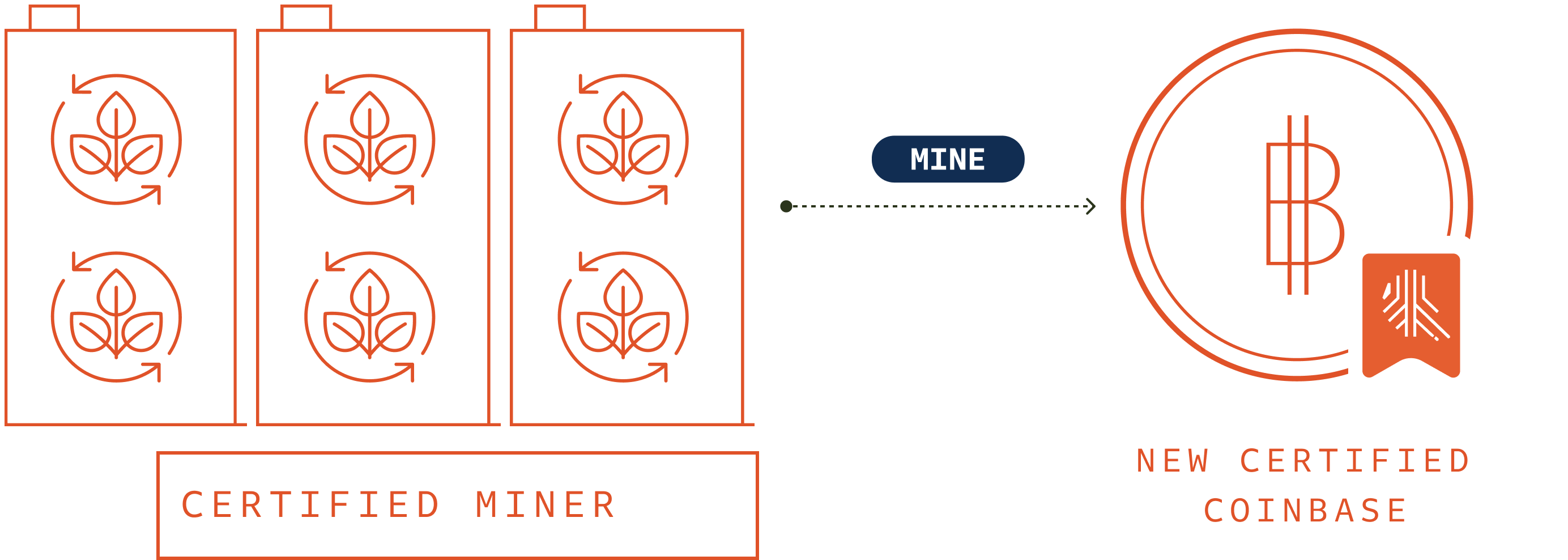
Certification answers the question before it is asked. The certificate ties the coin to the operation that mined it, recording the operator, the jurisdiction, the facility, and confirming a direct coinbase payout with no prior owners, which gives a compliance team a source of wealth file it can actually sign off. For a buyer sourcing directly from a certified miner, or for a family office that runs mining of its own, we go a step further and link the coins back to the inputs that produced them, so that the asset and the capital that built it sit in a single record.
Counterparty risk: the taint travels with the coin
Deploying capital into Bitcoin at any scale means buying from counterparties, and every coin you buy carries the history of everyone who held it before. That history does not reset at the point of sale, and it travels with the coin into your hands.
None of this is theoretical. When OFAC sanctioned the Bitcoin mixer Blender.io in May 2022, and its successor Sinbad.io in November 2023, the blocking obligation did not stop at the operators: anyone who later received coins from those addresses was required to freeze them, so downstream holders who had done nothing wrong inherited the exposure simply by sitting in the lineage. The 119,754 Bitcoin stolen from Bitfinex in 2016 stayed traceable for years before being recovered in what the US Department of Justice called its largest financial seizure to date.
For a family office the danger is not only a frozen balance but the headline that comes with it, because no principal wants to be the name attached to coins that trace back to a sanctioned mixer. Screening tools help, but they read the chain after the fact and they have gaps, which means a coin that clears a check today can be flagged tomorrow under a rule that did not exist when you bought it.
A coin with no prior transactional history carries no inherited exposure, for the simple reason that there are no prior owners to inherit it from. That is what buying virgin bitcoin directly from a certified miner gives you in place of buying on the open market. And for holders who are already invested, existing non certified positions can be swapped for freshly mined certified coins through our partners, so that moving to a clean book never means starting again from zero.
Where a mandate carries an environmental requirement, our Provenance and Energy tier attributes coins to renewable generation, and the difference from a book and claim credit is structural rather than cosmetic. A detached environmental token floats free of any particular coin, whereas a Bitroots attribute is bound to the exact coin you hold. Under audit, bound beats detached.
Inheritance and trusts: provenance that survives decades
Bitcoin left to heirs or settled into a trust can sit untouched for decades, and the rules only tighten over that horizon. Consider how young the rulebook still is: OFAC did not list its first cryptoasset address until 2018, so the compliance regime a coin will meet in 2050 has barely been drafted. A history that clears today can be reopened under standards nobody has yet written, and the people holding the coin by then, heirs and trustees, are the least able to defend a provenance they never created.
The risk here is not price, but whether the coin can still be sold when the time comes.
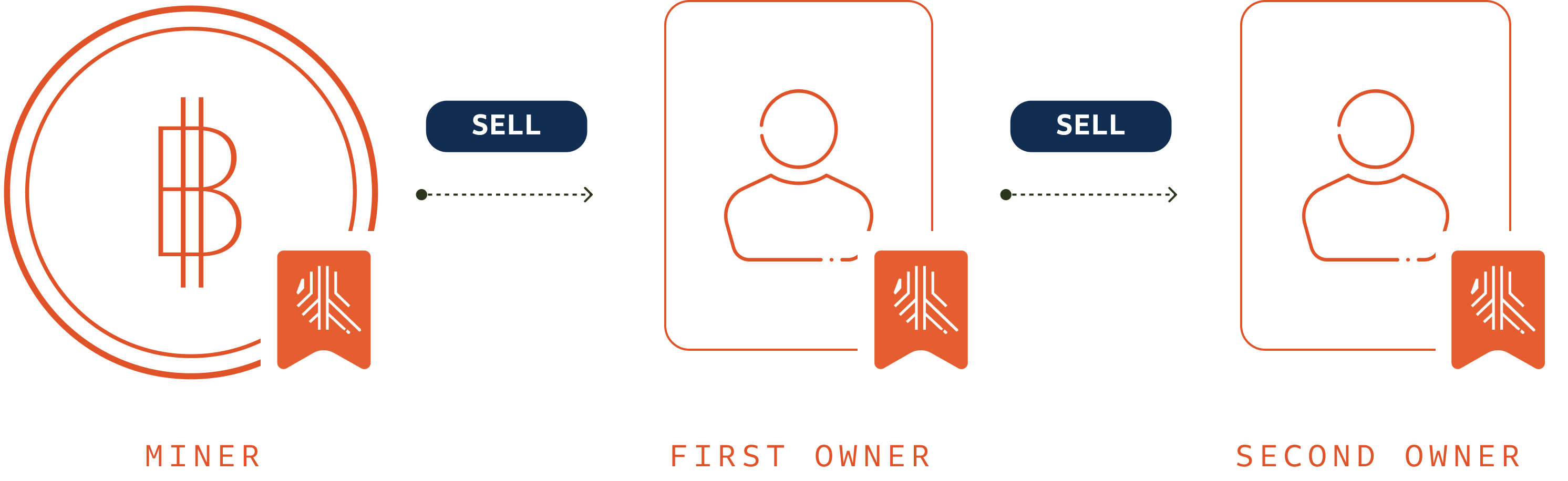
Fewer prior owners means less history to reopen later, so a certified coin begins with a minimal and fully documented record, which is the strongest position to carry into a compliance environment nobody can yet describe. For a trustee bound by fiduciary duty, that documented origin is often what makes Bitcoin acceptable to hold at all, and it protects the future spendability that is, in the end, the thing an heir actually inherits.
Liquidity and optionality: which venues will still accept it
There is a forward looking case here too, and it is not a price case.
What a coin is worth in practice depends on what you are able to do with it: which venues will accept it on deposit, which custodians will hold it, which lenders will take it as collateral, and which jurisdictions will let it move without raising a query. Every one of those is a compliance decision, and every one of them is tightening rather than loosening.
A non certified coin loses those options quietly over time. As venues raise their screening bar, coins with murky histories are increasingly declined, delayed, or frozen, and the holder tends to discover this at the worst possible moment, in the middle of a transaction. A certified coin does the opposite, keeping the maximum number of doors open precisely because the origin question has already been answered.
This is optionality, not speculation. You are not holding a certified coin because you expect it to be worth more later. You are holding it so that when you come to move it, sell it, borrow against it, or pass it on, the option is still there.
Who this is for
If you run a family office, advise private clients, or hold Bitcoin in trust, provenance is the line between an asset you can defend and one you have to explain. Certification at origin gives you a coin you can show a bank, hold without inheriting someone else's exposure, pass to the next generation, and keep fully usable as the rules continue to tighten.
If you'd like to find out more about certifying Bitcoin for a family office, private client, or trust, get in touch.